
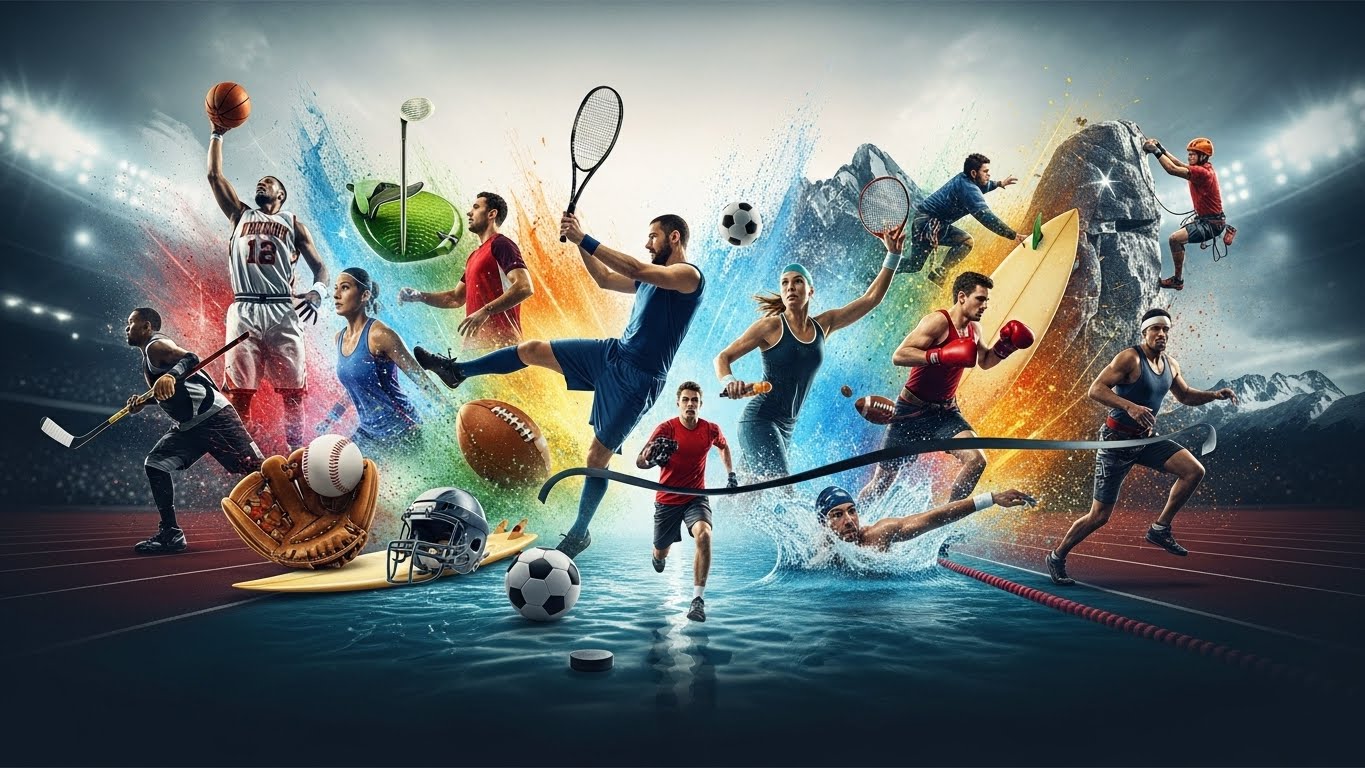
Sports have always been an intrinsic part of human culture. From the earliest forms of organized competition to the modern-day spectacle that captivates billions worldwide, the world of sports has evolved into a global phenomenon that brings people together, sparks passion, and fuels the drive for excellence. Whether it’s the intensity of a soccer match, the precision of a tennis serve, or the speed of an Olympic sprinter, sports offer a platform for athletes to showcase their talent, resilience, and determination. But beyond the competition and athleticism, sports also hold a deeper meaning, acting as a unifying force that transcends borders, cultures, and languages.
In this post, we explore the world of sports, delving into its history, its cultural significance, and its ever-growing impact on society today. From the grassroots level to the world stage, we will examine what makes sports such a powerful force in shaping human experiences and influencing global culture.
The Origins and Evolution of Sports
The history of sports stretches back thousands of years, with evidence of early forms of physical competition found in ancient civilizations. The ancient Greeks, for instance, are credited with founding the Olympic Games in 776 BC. These games, held in Olympia, were a celebration of athletic skill, but they also served as a religious and cultural event, honoring the gods. The Greek tradition of athletic competition would go on to influence countless civilizations, laying the foundation for modern sports.
In many ways, sports have always been a reflection of human nature: the desire to compete, to achieve, and to be recognized for one’s abilities. In ancient Rome, gladiators fought in the Coliseum as a form of public spectacle. Similarly, in medieval Europe, jousting tournaments and archery contests were a source of entertainment and pride. Over time, these informal competitions began to evolve into more structured and formalized sports.
The Industrial Revolution of the 19th century brought about significant changes in the world of sports. With the rise of cities, advances in transportation, and the creation of standardized rules, sports became more organized. Football, cricket, and rugby were codified, and international competitions began to take shape. The spread of sports through British colonialism also played a role in popularizing various games across the globe.
The Global Popularity of Sports
Today, sports are more popular than ever before, with millions of people participating in or following a wide array of athletic activities. Some sports, like soccer (football), basketball, and tennis, have reached truly global audiences. The FIFA World Cup, the Olympic Games, and the NBA Finals are just a few examples of events that attract massive international viewership.
Soccer is the most popular sport in the world, with an estimated 4 billion fans worldwide. The sport’s simplicity, accessibility, and universal appeal have made it a beloved pastime in virtually every country. Whether it’s a street game played by children in rural Africa or a professional match at one of Europe’s biggest stadiums, soccer is a sport that bridges cultural and geographic divides.
Basketball, too, has grown into a global sensation. The NBA, founded in 1946, is one of the premier professional leagues in the world, and its stars like Michael Jordan, LeBron James, and Kobe Bryant have achieved global fame. The sport’s fast pace, high-flying dunks, and international appeal have made it especially popular in countries like China, the Philippines, and Canada.
The Olympic Games, a global showcase of athletic achievement, have become a symbol of international unity and competition. Every four years, athletes from all corners of the globe come together to compete in a variety of sports, from track and field to swimming to gymnastics. The Olympics serve as both a celebration of human achievement and a reminder of the shared values of fair play, teamwork, and respect.
The Unifying Power of Sports
One of the most remarkable aspects of sports is their ability to unite people from diverse backgrounds. Whether it’s a national team representing its country or a local community rallying around a favorite club, sports have a way of bringing people together in ways that few other things can.
In times of political unrest or social division, sports often provide a common ground where individuals can set aside their differences. International events like the World Cup and the Olympics have the power to create moments of unity and pride for entire nations. For instance, during the 1995 Rugby World Cup, South Africa, still healing from the scars of apartheid, rallied around their national rugby team, who triumphed in a historic victory. Nelson Mandela, the country’s first black president, used this moment to promote reconciliation and national unity.
At the local level, sports can serve as a vehicle for social change. Community-based sports programs offer opportunities for youth to stay engaged, develop leadership skills, and form connections with others. Whether it’s through school teams or recreational leagues, sports provide an outlet for personal growth and a sense of belonging. They offer an environment where children from all walks of life can come together and pursue their passions while learning important life lessons about discipline, teamwork, and perseverance.
Sports also act as a powerful tool for breaking down barriers, especially in terms of gender and race. Female athletes, once marginalized or excluded from many sports, are now making history in fields ranging from soccer to tennis to the Olympics. Serena Williams, Billie Jean King, and Mia Hamm have become trailblazers for women in sports, inspiring countless young girls to pursue their dreams.
In the realm of racial equality, sports have played a pivotal role in challenging societal norms and advancing social justice. The iconic image of Tommie Smith and John Carlos raising their fists in protest during the 1968 Olympics is one of the most powerful demonstrations of activism in the history of sports. More recently, athletes like Colin Kaepernick have used their platforms to raise awareness about racial inequality and police brutality, sparking important conversations in and outside the world of sports.
The Business of Sports
While sports are often celebrated for their cultural and social impact, they are also a major economic force. The sports industry is valued in the billions of dollars, with professional leagues, broadcasting rights, sponsorship deals, and merchandise sales contributing to the financial success of the sector. Major sports leagues like the NFL, NBA, MLB, and European football leagues generate vast amounts of revenue from ticket sales, broadcasting deals, and commercial partnerships.
Athletes themselves have become global brands, signing lucrative endorsement deals with companies ranging from Nike to Gatorade. The commercial side of sports has made it possible for athletes to earn multimillion-dollar salaries and build personal empires. LeBron James, for example, has not only excelled on the basketball court but has also become a powerful media mogul, businessman, and philanthropist.
Sports broadcasting, particularly with the rise of digital media, has transformed how fans consume sports content. With the explosion of streaming platforms and social media, fans can now watch games, highlights, and behind-the-scenes footage on their smartphones, tablets, and laptops. Major sporting events are broadcasted to a global audience, with millions tuning in to watch their favorite teams and athletes compete for glory.
The Impact of Technology on Sports
Technology has also had a profound impact on sports, both in terms of how games are played and how they are viewed. Innovations in equipment design, training techniques, and injury prevention have changed the way athletes approach their craft. The use of data analytics has revolutionized team strategies, with coaches and players relying on statistical analysis to gain a competitive edge.
In terms of broadcasting, advances in virtual reality (VR), augmented reality (AR), and 4K resolution have made watching sports a more immersive experience. Fans can now enjoy a level of visual detail and interaction that was once unimaginable. VR technology, for example, has allowed fans to experience live events as if they were sitting courtside or standing on the field with the athletes.
Technology has also changed the way games are officiated. The introduction of video assistant referees (VAR) in soccer and the use of instant replay in football and basketball have made it easier to review decisions and ensure fairness. While these technologies have sparked debate in some cases, they have undeniably helped make sports more accurate and transparent.
The Future of Sports
As sports continue to evolve, the future promises even more exciting developments. With the rise of esports, competitive gaming has emerged as a legitimate form of sport, attracting millions of players and fans. Esports tournaments now rival traditional sporting events in terms of viewership, and professional gamers are earning massive salaries from sponsorships and tournament prizes.
The integration of AI, robotics, and further advancements in VR/AR will continue to reshape the sports landscape. Whether it’s through smarter training tools, virtual fan experiences, or more precise officiating, technology will continue to push the boundaries of what is possible in sports.
Additionally, the growing emphasis on athlete well-being, mental health, and social responsibility suggests that sports will become even more focused on the holistic development of individuals. Athletes are no longer just seen as competitors; they are also advocates for social change, role models for future generations, and influential voices in shaping the world.
Conclusion
Sports are more than just games played on fields or courts; they are a reflection of human passion, perseverance, and unity. Whether it’s the excitement of a match, the lessons learned through competition, or the way sports bring communities and nations together, their impact on society is undeniable. As the world of sports continues to evolve, it will remain a powerful force for entertainment, social change, and global connection, bringing people together to celebrate the universal joy of competition and achievement.